
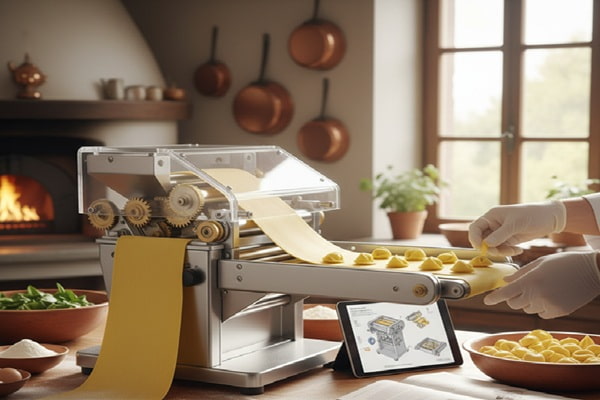
Walk into a busy pasta factory in northern Italy, and you will hear a steady rhythm. Dough rolls out smoothly, fillings are placed with precision, and small, perfect pieces of pasta come together in seconds. At the center of this process is the tortellinatrice, a machine built to automate one of the most delicate culinary traditions.
For years, tortellini was shaped by hand. It required skill, patience, and hours of focused work. The tortellinatrice changed that. It brought speed without losing the essence of traditional pasta. Understanding how this machine works gives you a deeper look into how food production has evolved without leaving its roots behind.
What Is a Tortellinatrice
A tortellinatrice is a specialized machine designed to produce tortellini and similar stuffed pasta automatically. It takes dough and filling, processes them together, and shapes them into uniform pasta pieces.
The word comes from Italian. Tortellini refers to the small ring-shaped stuffed pasta, and trice relates to machinery. Together, it describes a device that forms tortellini at scale.
This machine is widely used in commercial kitchens, pasta factories, and food processing units. It helps produce thousands of pieces per hour, something impossible with manual methods.
The Story Behind Tortellinatrice
Tortellini has deep roots in Italian cuisine, especially in regions like Emilia Romagna. Traditionally, families would gather to prepare pasta by hand. Each piece was folded carefully, often using a fingertip to shape the ring.
As demand grew, restaurants and food producers needed faster methods. Labor costs increased, and consistency became harder to maintain. This created the need for automation.
The tortellinatrice was developed to solve these challenges. Early versions were simple mechanical devices. Over time, they evolved into advanced machines with precise controls, interchangeable molds, and automated feeding systems.
This shift did not replace tradition. Instead, it allowed traditional recipes to reach more people without losing quality.
How a Tortellinatrice Works
The working process of a tortellinatrice is simple to understand, but the engineering behind it is highly refined.
First, the dough is prepared and fed into the machine. It passes through rollers that flatten it into thin sheets. Thickness can be adjusted depending on the recipe.
Next, the filling is added. This is usually done through a controlled nozzle that places small portions at equal distances.
Then comes the shaping stage. The machine folds the dough over the filling and uses molds to cut and shape each piece into tortellini.
Finally, the finished pasta is released onto a tray or conveyor. From there, it can be cooked, frozen, or packaged.
Each step is timed carefully. Even a small mistake in timing or pressure can affect the final shape and texture.
Types of Tortellinatrice Machines
Not all tortellinatrice machines are the same. They vary based on size, capacity, and level of automation.
Manual models are simple and require human control. They are often used in small kitchens or artisanal setups. These machines still save time but need skilled handling.
Semi automatic machines combine manual input with automated shaping. They are popular in medium scale production where flexibility is important.
Fully automatic tortellinatrice machines handle everything from dough feeding to final output. These are used in large factories where speed and consistency are critical.
Some advanced machines also allow quick changes in shape and size. This means producers can switch from tortellini to ravioli or other stuffed pasta with minimal adjustments.
Key Features That Matter
A good tortellinatrice is not just about speed. Several features define its performance and reliability.
Precision is the most important factor. Each piece of pasta should look and weigh the same. This ensures even cooking and consistent taste.
Adjustable settings allow users to control dough thickness, filling quantity, and shaping pressure. This flexibility helps maintain traditional recipes.
Durability is also critical. These machines run for long hours, so they must be built with strong materials like stainless steel.
Ease of cleaning cannot be ignored. Food safety depends on proper hygiene, and machines must be easy to dismantle and clean.
Modern machines often include digital controls. These allow operators to monitor performance and make quick adjustments.
Benefits of Using a Tortellinatrice
The biggest advantage of a tortellinatrice is efficiency. What once took hours can now be done in minutes.
Consistency is another major benefit. Every piece of tortellini looks the same, which improves presentation and customer satisfaction.
Labor costs are reduced. Fewer workers are needed to produce large quantities of pasta.
The machine also reduces physical strain. Hand shaping pasta can be tiring, especially during long production hours.
Scalability becomes easier. Businesses can increase output without compromising quality.
Does It Affect Taste and Quality
Many people wonder if machine made pasta tastes different from handmade versions.
The answer depends on how the machine is used. A well calibrated tortellinatrice can produce pasta that is almost identical to handmade pieces.
The key factors are dough quality and filling. If these are prepared carefully, the machine simply shapes them without altering flavor.
In fact, consistency can improve the overall eating experience. Each piece cooks evenly and holds the filling properly.
Traditional chefs often combine both methods. They use machines for large batches and handcraft special dishes for unique occasions.
Tortellinatrice in Modern Food Industry
The role of tortellinatrice has expanded beyond Italian kitchens. It is now used in global food production.
Frozen food companies rely on these machines to produce ready to cook pasta. Restaurants use them to maintain steady supply during busy hours.
Even cloud kitchens and catering businesses benefit from this technology. It allows them to deliver consistent quality across multiple orders.
The machine also supports innovation. Producers can experiment with new fillings, shapes, and flavors without increasing workload.
Choosing the Right Tortellinatrice
Selecting the right machine depends on several factors.
Production volume is the first consideration. A small kitchen does not need a high capacity industrial machine.
Space and budget also matter. Larger machines require more room and investment.
Ease of use is important for teams with limited technical skills. Machines with simple controls reduce training time.
Maintenance support should not be overlooked. Reliable service ensures the machine runs smoothly over time.
It is also wise to test the machine before purchase. This helps understand how it handles different dough types and fillings.
Maintenance and Care Tips
A tortellinatrice needs regular care to perform well.
Cleaning should be done after each use. Leftover dough can harden and affect future batches.
Lubrication of moving parts keeps the machine running smoothly. This reduces wear and tear.
Regular inspections help identify small issues before they become major problems.
Operators should follow the manufacturer guidelines closely. This ensures safety and long term performance.
Common Challenges and Solutions
Even the best machines face challenges.
Dough sticking to rollers is a common issue. This can be solved by adjusting moisture levels or using proper flour.
Uneven filling distribution may occur if the nozzle is not calibrated correctly. Regular checks help maintain accuracy.
Machine jams can happen if foreign objects enter the system. Proper preparation and inspection prevent this problem.
Training plays a big role in avoiding errors. Skilled operators can handle most issues quickly.
Also Read : Supermaked Explained Complete Guide to the Modern Retail Strategy That Drives Sales
The Future of Tortellinatrice
Technology continues to improve the capabilities of tortellinatrice machines.
Automation is becoming smarter. Machines can now adjust settings automatically based on input conditions.
Integration with digital systems allows real time monitoring. Producers can track performance and make data driven decisions.
Energy efficiency is also improving. New models use less power while maintaining high output.
Customization is another growing trend. Machines are being designed to handle a wider range of pasta styles and fillings.
These changes show that the tortellinatrice is not just a machine. It is part of a larger shift toward smarter food production.
Why Tortellinatrice Still Matters
Despite all the advances in cooking technology, the tortellinatrice holds a special place.
It represents a balance between tradition and innovation. It keeps the essence of handmade pasta alive while meeting modern demands.
For businesses, it offers reliability and growth potential. For consumers, it ensures consistent quality.
The machine does not replace the art of cooking. It supports it by handling repetitive tasks, allowing chefs to focus on creativity.
Final Thoughts
The journey from handmade tortellini to automated production tells a powerful story. It shows how food traditions adapt without losing their identity.
A tortellinatrice is more than a piece of equipment. It is a bridge between past and present. It respects the craft while making it accessible to more people.
Understanding this machine gives you a new appreciation for the pasta on your plate. Behind each piece is a blend of skill, technology, and passion.
As food production continues to evolve, the tortellinatrice will remain a key player. It proves that innovation works best when it supports tradition rather than replacing it.