
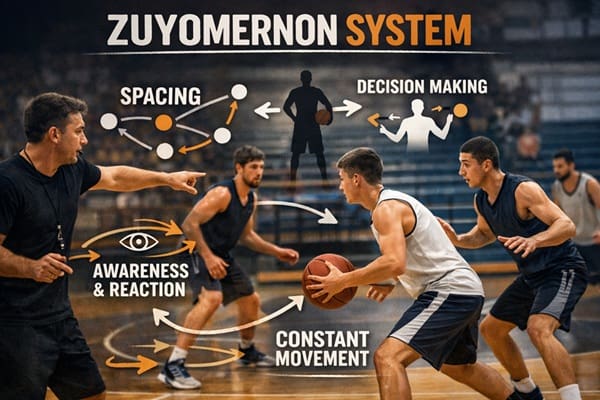
The first time people hear about the Zuyomernon System in basketball, it often sounds like just another strategy or training method. But once you look closer, it becomes clear that this system is built on something deeper. It focuses on how players think, react, and work together on the court rather than just what plays they run.
This approach has started to gain attention because it doesn’t rely on fixed patterns. Instead, it trains players to read the game in real time. That shift from memorizing plays to understanding movement is what makes the Zuyomernon System stand out.
Contents
- 1 What Is the Zuyomernon System
- 2 The Origin and Idea Behind the System
- 3 How the Zuyomernon System Works on the Court
- 4 Key Principles That Define the System
- 5 Why Coaches Are Paying Attention
- 6 Player Development Through the Zuyomernon System
- 7 Differences From Traditional Basketball Systems
- 8 Challenges of Using the Zuyomernon System
- 9 Real Game Situations and Examples
- 10 Why Players Enjoy This System
- 11 Impact on Team Chemistry
- 12 Training Methods Used in the System
- 13 Who Should Use the Zuyomernon System
- 14 Common Misconceptions
- 15 Future of the Zuyomernon System in Basketball
- 16 Final Thoughts
What Is the Zuyomernon System
The Zuyomernon System is a basketball framework that combines decision-making, spacing, and player awareness into one fluid style of play. Rather than forcing players into rigid roles, it encourages them to adapt based on what is happening during the game.
At its core, the system teaches players to move with purpose. Every pass, cut, and position has a reason tied to reading defenders and creating space. Players are not waiting for instructions. They are constantly making small decisions that shape the flow of the game.
This system is often described as a thinking game model. It pushes athletes to understand why they are doing something, not just how to do it.
The Origin and Idea Behind the System
The idea behind the Zuyomernon System comes from a simple observation. Basketball is unpredictable. No matter how well a team practices set plays, real games always bring unexpected situations.
Traditional systems try to control the chaos by adding structure. The Zuyomernon System does the opposite. It trains players to handle chaos by improving their awareness and reaction speed.
Coaches who support this method believe that players should be able to solve problems on the court without waiting for guidance. This makes the team more flexible and harder to defend.
The system has gained traction among coaches who value player intelligence and adaptability over strict control.
How the Zuyomernon System Works on the Court
When you watch a team using the Zuyomernon System, the first thing you notice is movement. Players are rarely standing still. They are constantly adjusting their positions based on the ball, defenders, and available space.
There are no fixed plays that must be followed step by step. Instead, players follow a set of principles.
They maintain proper spacing so the court stays open. They make quick passes to keep the defense moving. They cut toward open areas instead of predetermined spots. They also communicate continuously, both verbally and through movement.
The system depends on trust. Each player must believe that their teammates will make the right decision. This shared understanding allows the team to function as a single unit.
Key Principles That Define the System
The Zuyomernon System is built on a few core ideas that guide every action on the court.
The first principle is spacing. Players learn how to position themselves so that the court remains balanced. Good spacing creates opportunities for drives, passes, and shots.
The second principle is timing. Movement is not random. Players must know when to cut, pass, or shoot. Good timing keeps the offense smooth and prevents confusion.
The third principle is awareness. Players are trained to read defenders, anticipate actions, and react quickly. This makes the offense unpredictable.
The fourth principle is simplicity. Even though the system looks complex, it relies on simple actions done well. This keeps players focused and reduces mistakes.
Why Coaches Are Paying Attention
Many coaches are turning to the Zuyomernon System because it solves common problems found in traditional basketball systems.
One major issue is predictability. When teams rely too much on set plays, opponents can study and counter them. The Zuyomernon System avoids this by keeping actions flexible.
Another issue is player dependency. Some systems rely heavily on one star player. This system spreads responsibility across the team. Every player becomes involved in decision-making.
Coaches also appreciate how it develops smarter players. Athletes learn to think, not just execute. This skill stays with them even when they move to different teams or levels.
Player Development Through the Zuyomernon System
The system has a strong focus on long-term player growth. It is not just about winning games. It is about building complete players.
Players improve their court vision because they must constantly read situations. They also develop better communication skills since teamwork is essential.
Decision-making becomes faster and more accurate. Instead of hesitating, players learn to trust their instincts.
Confidence also increases. When players understand the game, they feel more in control. This leads to better performance under pressure.
Differences From Traditional Basketball Systems
Most traditional systems rely on structured plays. Coaches design specific movements, and players follow them step by step.
The Zuyomernon System takes a different path. It gives players freedom within a framework.
In a traditional system, a player might run to a fixed spot regardless of the defense. In the Zuyomernon System, the player adjusts based on what they see.
Traditional systems often require constant direction from the coach. This system reduces that need because players can make their own decisions.
The result is a more dynamic and fluid style of play.
Challenges of Using the Zuyomernon System
While the system offers many benefits, it is not easy to implement.
One challenge is the learning curve. Players who are used to structured systems may struggle at first. They need time to adjust to thinking independently.
Another challenge is consistency. Because the system relies on decision-making, mistakes can happen if players are not fully trained.
Coaches also need patience. Teaching this system requires more time and effort compared to teaching set plays.
However, teams that commit to the process often see strong results over time.
Real Game Situations and Examples
Imagine a fast break situation. In a traditional system, players might follow a specific pattern. In the Zuyomernon System, players react based on the defense.
If a defender blocks the lane, a player might pass to the side instead of forcing a shot. If space opens up, they attack quickly.
In half-court offense, players constantly adjust their positions. A player might cut to the basket if they see an opening. Another player might move to create space for a teammate.
These small decisions happen in seconds, creating a fluid and unpredictable offense.
Why Players Enjoy This System
Many players find the Zuyomernon System more engaging than traditional systems.
It gives them a sense of freedom. They are not restricted to fixed roles or patterns.
They also feel more involved in the game. Every player has a role in decision-making, which increases motivation.
The system encourages creativity. Players can use their skills in different ways instead of following strict instructions.
This makes the game more enjoyable and rewarding.
Impact on Team Chemistry
The Zuyomernon System has a strong effect on team chemistry.
Because the system relies on trust, players must work closely together. They learn to understand each other’s movements and tendencies.
Communication becomes essential. Players talk more, both during practice and games.
This builds stronger relationships within the team. When players trust each other, they perform better as a unit.
The system also reduces ego. Since everyone contributes, no single player dominates the game.
Training Methods Used in the System
Training for the Zuyomernon System focuses on real game situations rather than isolated drills.
Coaches use small-sided games to improve decision-making. These drills force players to think quickly and adapt.
Players practice reading defenders and reacting to changes. This builds awareness and confidence.
Passing drills are also important. Quick and accurate passing keeps the offense moving.
Conditioning is integrated into gameplay. Players build stamina while practicing real scenarios.
Who Should Use the Zuyomernon System
The system works best for teams that value teamwork and intelligence.
It is suitable for youth players who are still learning the game. It helps them develop strong fundamentals and understanding.
It also works for advanced players who want to improve their decision-making skills.
Teams with balanced talent benefit the most. Since the system spreads responsibility, it does not rely on a single star.
However, teams must be willing to invest time in learning the system.
Also Read : Tortellinatrice Explained Complete Guide to Pasta Machine Benefits Uses and Working
Common Misconceptions
Some people believe that the Zuyomernon System lacks structure. This is not true.
The system has clear principles that guide player actions. It simply allows flexibility within those principles.
Another misconception is that it is too complex. While it requires thinking, the actions themselves are simple.
Some also think it only works for experienced players. In reality, it can be taught at any level with proper coaching.
Future of the Zuyomernon System in Basketball
The Zuyomernon System reflects a broader shift in basketball. The game is moving toward faster, smarter, and more flexible styles of play.
As players become more skilled and versatile, systems that allow freedom will likely become more popular.
The rise of positionless basketball supports this trend. Players are no longer limited to specific roles.
The Zuyomernon System fits well into this modern approach. It encourages players to adapt and evolve.
Final Thoughts
The Zuyomernon System is more than just a strategy. It is a way of understanding basketball.
It teaches players to think, react, and work together. It values awareness over memorization and teamwork over individual dominance.
While it requires effort to learn, the rewards are clear. Teams become more dynamic, players become smarter, and the game becomes more enjoyable.
For coaches and players looking to move beyond traditional systems, the Zuyomernon System offers a fresh and effective approach.